
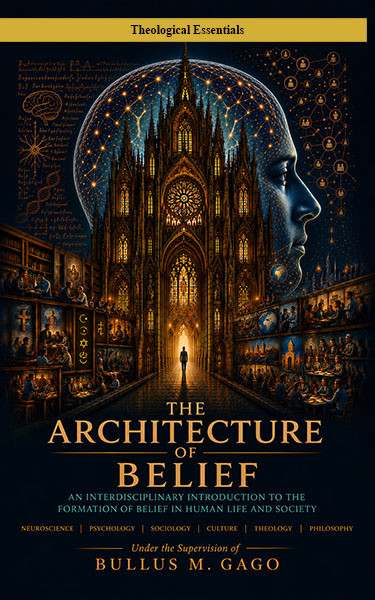
Summary in English
Why do people believe what they believe? Why do some convictions endure across generations while others disappear? Why do beliefs inspire acts of extraordinary compassion, sacrifice, creativity, and hope—and, at times, conflict and division? The Architecture of Belief explores these questions through an ambitious interdisciplinary journey into the foundations of human meaning-making. Drawing on insights from neuroscience, psychology, sociology, anthropology, philosophy, and theology, this volume examines how beliefs are formed through consciousness, family, culture, community, memory, ritual, existential insecurity, and religious imagination. Far more than a study of ideas, it reveals belief as a dynamic force that shapes personal identity, social life, moral vision, and human destiny.
Written for students, scholars, clergy, and thoughtful readers, The Architecture of Belief offers a rich framework for understanding one of the most powerful dimensions of human existence. Rather than reducing belief to biology, culture, or psychology alone, the book demonstrates how these dimensions interact within the larger human search for truth, meaning, belonging, and transcendence. Whether examining the role of sacred narratives, the influence of social institutions, the power of theological imagination, or the enduring quest for hope in a fragile world, this volume invites readers to reflect more deeply on the beliefs they inhabit—and the beliefs that, in turn, shape them.
Theological Essentials
Artificial Intelligence (AI) is changing everything, including theological scholarship and education. This series, Theological Essentials, is designed to bring the creative potential of AI to the field of theological education.
The creator of each volume has been trained by the DTL staff in the use of AI and the creator has used AI to create, edit, revise and recreate the text that you see. The goals of this series are to produce introductory theological textbooks that are credible, affordable and accessible.