
Summary in English
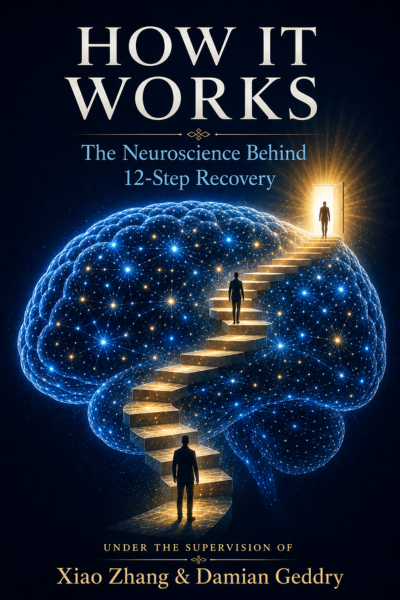
How It Works: The Neuroscience Behind 12-Step Recovery offers a clear, compassionate, and scientifically informed explanation of why the 12 Steps work. Bringing together modern neuroscience and the wisdom of recovery, Xiao Zhang and Damian Geddry show that addiction is not simply a bad habit, a weak will, or a moral failure. It is a condition that alters the brain’s systems for reward, decision-making, stress, memory, and connection. Yet the same brain that can be reshaped by addiction is also capable of healing.
This book walks readers step by step through the recovery process, connecting each of the 12 Steps to a key area of brain science. Powerlessness is linked to the prefrontal cortex and the limits of self-control. Hope is connected to dopamine and renewed motivation. Surrender is explored through stress regulation, the amygdala, cortisol, and the body’s calming systems. Moral inventory becomes a process of memory reconsolidation. Confession, amends, spiritual practice, and service are shown to engage the social brain, attention networks, empathy circuits, and the brain’s capacity for meaning.
Accessible without being simplistic, this volume is written for people in recovery, sponsors, family members, clergy, counselors, and practitioners who want language for what recovery looks like in both the soul and the nervous system. It does not reduce the 12 Steps to brain chemistry, nor does it replace their spiritual and communal wisdom. Instead, it shows how science can deepen our appreciation for grace, honesty, humility, trust, and service.
For readers who have wondered why meetings matter, why isolation is so dangerous, why prayer and meditation can calm the mind, or why helping others strengthens sobriety, this book offers an illuminating answer: recovery is not only a spiritual awakening. It is also a whole-brain transformation toward freedom, connection, purpose, and peace.
Theological Essentials
Artificial Intelligence (AI) is changing everything, including theological scholarship and education. This series, Theological Essentials, is designed to bring the creative potential of AI to the field of theological education.
The creator of each volume has been trained by the DTL staff in the use of AI and the creator has used AI to create, edit, revise and recreate the text that you see. The goals of this series are to produce introductory theological textbooks that are credible, affordable and accessible.